How Khaite Quietly Made Me Rethink My Closet
I never imagined a brand could feel like a gentle nudge rather than a loud announcement. Khaite did that — not with slogans or campaigns, but with subtle insistence, a quiet insistence that seeped into my everyday perception of clothes. It started innocuously, the way most conversions do: a dress spotted online, pinned because of an aesthetic I couldn’t quite articulate, admired from a distance that felt safe.
At first, I didn’t call it a conversion. I called it curiosity, curiosity that pricked me in the chest as I scrolled past the images. A simple coat, clean lines, fabric that looked as though it had been considered from every angle before it even left the atelier. There was no embellishment to distract, no logos screaming status. Just thoughtfulness, a quiet certainty that someone, somewhere, had asked themselves what a woman might actually need in her wardrobe rather than what she should aspire to. That subtle difference — need versus aspiration — was the first crack in my habitual accumulation of clothes.
I tried to explain the allure to myself logically. Khaite is expensive, yes. But it isn’t indulgent in the way that I had long been wary of indulgence. It doesn’t manufacture desire through excess; it manufactures desire through restraint. Every piece carries a sense of deliberation — nothing is arbitrary, everything is functional and beautiful in a way that feels inevitable once you understand it. I found myself looking at my closet differently: a chaotic mix of impulse purchases, seasonal trends, and items that had promised joy but quietly failed to deliver. Compared to Khaite, my collection was noisy, cluttered, and exhausting.
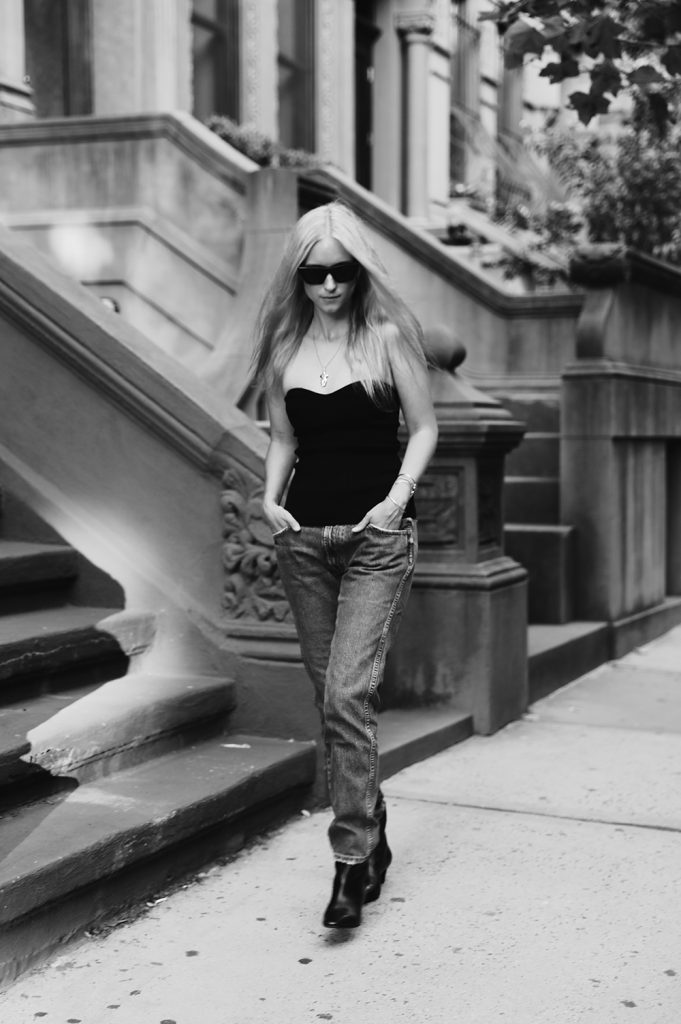
And then I tried something. Not the coat I had admired first — I wasn’t ready for such a commitment — but a simple blouse. I expected to feel a slight pang of doubt, a whisper of buyer’s remorse. Instead, I noticed how the fabric sat against my skin, the way it allowed movement without crumpling or clinging. I noticed the attention to proportion and cut, how a sleeve ended where it should without screaming for attention. And I realized that this attention to detail — so quiet, so deliberate — was something I had almost forgotten to look for in clothing.
The more pieces I encountered, the more this quiet logic began to infiltrate my thinking. Khaite doesn’t ask you to own more; it asks you to own better. It’s an education in priorities: what will you reach for again and again? What will endure the season, the laundry, the inevitable wear that comes with living? In this way, a brand became a lens through which I re-examined my relationship with every other item I had accumulated.
I started noticing patterns. Minimal doesn’t mean boring. It doesn’t mean neutral or invisible. It means intentionality. The skirt I ordered, simple but sculpted, didn’t scream style but demanded attention through subtlety. The knit top, in a hue that I would have once dismissed as “too plain,” seemed almost to challenge me: could I trust simplicity to feel luxurious? Could restraint itself provide satisfaction? The answer, unexpectedly, was yes.
Shopping became an exercise in deliberation rather than indulgence. I noticed the difference immediately: my previous method involved scrolling endlessly, eyes darting, attention splintered, guided by reviews, thumbnails, algorithmic suggestions. Khaite forced a slower pace. I studied fabrics, I compared shapes, I imagined real wear. There was no need to hurry, no need to accumulate. Each decision mattered precisely because the pieces were fewer, their weight in my wardrobe more significant.
And yet, it was not prescriptive. Khaite doesn’t insist that you abandon everything else in your closet. It simply presents an alternative: consider, reflect, choose. There’s a subtle pedagogy in that approach, one that does not scold or shame, only clarifies. And it works quietly, with a soft insistence that accumulates until, one day, you realize you’ve started to reorder your habits. You reach for fewer pieces but gain clarity, not just in clothing, but in thought.
I began pairing new Khaite pieces with older items, testing how restraint might transform a casual mix into something deliberate. And in doing so, I saw the inverse truth of my former wardrobe: abundance without coherence creates friction. Too many choices, too many patterns, too many competing impulses. Minimalism in this sense is not deprivation; it’s relief, a clearing of cognitive clutter that mirrors a wardrobe stripped to essentials.
There is also an odd intimacy to the experience. When you wear Khaite, you wear the thoughtfulness embedded in the piece. It’s tangible, though not flashy — a sleeve that ends just so, a neckline that follows the line of your collarbone without exaggeration, a texture that invites touch without demanding it. These are small, almost imperceptible gestures that shape the way you inhabit your own body and space. I noticed posture, the way I moved through rooms, the small satisfaction of clothes that simply work.
And yet, I am aware of the paradox: Khaite is a luxury brand. The conversion to minimalism comes at a cost, both financial and psychological. It’s a reminder that intentionality can be expensive, that convenience and thoughtfulness are often at odds in contemporary shopping. There’s a tension here, one that Khaite doesn’t resolve, but only highlights. It’s a tension worth acknowledging: the desire for simplicity in a world designed to complicate.
Inevitably, I began applying the lesson beyond clothing. Minimal doesn’t have to be aesthetic; it can be operational. How many items in my home, in my routine, in my attention, are cluttering my capacity? Khaite’s lesson is subtle but far-reaching: clarity emerges not through addition, but through subtraction, through selection, through deliberate engagement. It’s a model that extends beyond fashion into the way I consider time, focus, and even relationships.
There’s also the pleasure of repeatability. When you invest in quality, when you respect the logic of cut and fabric, you wear things over and over. There’s no compulsion to replace, no seasonal obsolescence imposed from outside. This quiet endurance — something that once felt elusive — becomes almost a relief. In a world of constant novelty, a few pieces that you trust are revolutionary in themselves.
I haven’t abandoned color, pattern, or whimsy, but I have become choosier. A blouse that once might have been fun now must pass a second test: will it endure? Will it integrate with intention? Will it resonate in its simplicity rather than distract with excess? It’s a slow recalibration, and one that is almost imperceptible until you notice the difference in how you dress, how you shop, how you think.
And so, Khaite converted me, not with fanfare, but with quiet insistence. The conversion isn’t about a brand, per se, but about the patience and attention that it embodies. It has recalibrated my relationship to clothing, to accumulation, to desire itself. And in that recalibration, there is a subtle but undeniable satisfaction — the kind that comes from aligning impulse with reflection, taste with restraint, and purchase with purpose.
I find myself returning to their collections with a strange mix of curiosity and discipline, scanning each piece, imagining the life it might have in my wardrobe. It’s no longer about instant gratification or novelty; it’s about the story a garment can tell through its thoughtful existence. Minimalism, in this sense, becomes an act of care — for self, for time, and for the things we choose to keep.
This is not to suggest perfection. I still stumble, I still indulge, I still purchase without full reflection. But the presence of Khaite in my wardrobe — the quiet, deliberate presence — changes the baseline. It challenges the habit of accumulation for its own sake and elevates the act of selection into something almost meditative. It teaches that minimalism is not absence; it is intention, presence, and, oddly enough, delight.
In the end, I don’t wear Khaite to show off a logo or a name; I wear it to experience clarity, to inhabit simplicity, and to remember that the most profound transformations often arrive quietly, without ceremony, through small, deliberate choices that eventually accumulate into something lasting.
And in that quiet accumulation, I found a version of dressing — and thinking — that I hadn’t realized I was missing.