Walking Through a Children’s Room That Knows It’s Being Looked At
There’s a particular kind of quiet you feel when you walk into a beautifully designed children’s bedroom that has never actually been interrupted by children. Not literally, of course. Toys exist. Books are placed at an angle that suggests hands. But the room itself feels… composed. Like it has already decided how the story should be told.
That was my first thought scrolling through Charlotte Groeneveld’s children’s bedrooms. Not envy. Not inspiration. Recognition. This is a room that understands the internet.
Which isn’t a criticism. It’s an observation.
Children’s bedrooms used to be the least curated spaces in a home. They were loud, slightly chaotic, and immune to adult aesthetics. Somewhere along the way — roughly around the rise of lifestyle Instagram — they became extensions of brand identity. Soft palettes replaced primary colors. Open shelving replaced toy chests. Books began to face outward, their covers doubling as visual punctuation.
Charlotte’s children’s rooms sit firmly inside that evolution. They are calm, airy, deliberately gentle. Nothing shouts. Nothing competes. The walls don’t demand attention; they receive it. You can almost hear the room saying, “This is a safe place to be quiet.”
What’s interesting is how carefully neutrality is constructed here. Neutral doesn’t mean empty. It means edited. Beige, cream, muted wood tones — but always layered. A woven rug that looks like it has never seen a juice spill. Bedding that feels intentionally rumpled. Wall art that gestures toward childhood without surrendering to it.
The rooms feel less like spaces children took over and more like spaces children were invited into.
And that’s where the tension lives.
Because on one hand, the rooms are undeniably thoughtful. They’re not sterile. There’s warmth in the textures, softness in the light. The furniture choices are scaled correctly. Beds feel solid, not temporary. Storage exists, even if it’s discreet. This isn’t a showroom pretending to be a nursery.
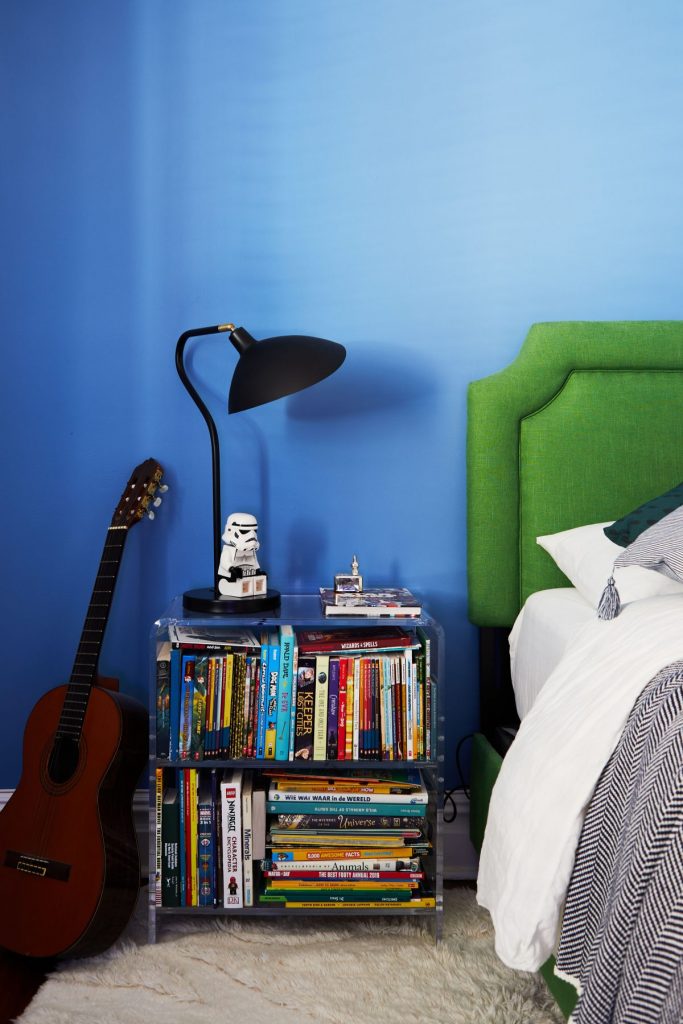
On the other hand, there’s a sense that mess is allowed only in theory.
I found myself looking for evidence of resistance. A mismatched toy. A crayon mark that escaped design approval. Something that suggested a child had made an executive decision without consulting the aesthetic direction. But most of what’s visible feels… compliant.
That doesn’t mean the children aren’t happy. It means the rooms prioritize atmosphere over spontaneity.
Which, again, isn’t wrong. It’s just a choice.
There’s a particular confidence in designing a child’s room this way. It assumes that calm is preferable to stimulation, that restraint is a value worth passing down early. It assumes that children don’t need visual chaos to feel imaginative — that imagination will happen anyway, quietly, internally.
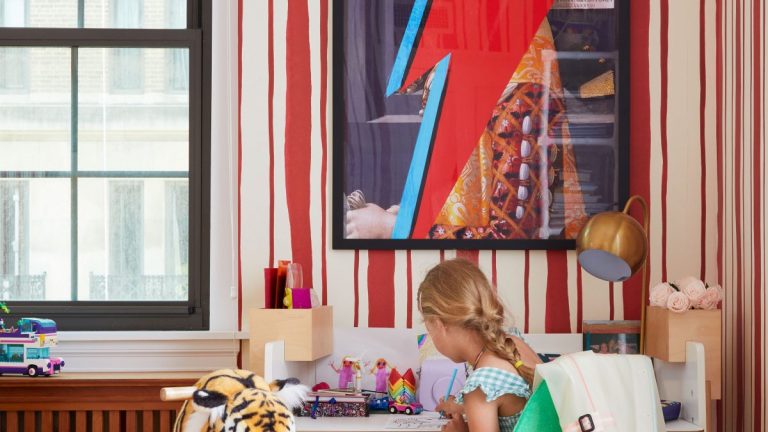
This philosophy shows up in the furniture. Clean-lined beds. Simple desks. Chairs that look like smaller versions of adult seating rather than playful novelties. The message is subtle but consistent: you belong here, but you are also learning how to live in a grown-up world.
It’s aspirational parenting through plywood and linen.
The objects themselves are interesting not because they’re extravagant, but because they’re intentional. A reading lamp that looks architectural rather than cute. A bookshelf curated to look full but not crowded. Storage baskets that hide plastic behind woven respectability. Even the toys that are visible tend to be wooden, muted, tactile — toys that photograph well and age gracefully.
Nothing here will be outgrown quickly. That’s the point.
And yet, childhood is defined by outgrowing things.
There’s a small irony in designing a child’s space to be timeless when the inhabitant is anything but. These rooms are prepared for longevity in a phase that is, by nature, brief. It’s as if the design is trying to slow time down, to stretch a moment that parents know will pass too fast.
I understand that impulse deeply.
If I had to put a word to these rooms, it wouldn’t be “playful.” It would be “protective.” Protective of calm. Protective of taste. Protective of a certain idea of childhood that feels safe, curated, and aesthetically gentle.
And perhaps protective of the adults, too.
Because beautifully designed children’s rooms aren’t just for children. They’re for parents who want to feel at ease in their own homes. They’re for not flinching when you walk past the open door. They’re for continuity — for the sense that having children didn’t mean abandoning your visual language entirely.
Charlotte’s rooms don’t feel like a departure from the rest of the house. They feel like a translation.
There’s also something worth noting about scale. The rooms don’t overwhelm. They don’t scream “this is the children’s wing.” They’re integrated. Measured. As if the children are participants in the household aesthetic rather than the reason it was rewritten.
That’s a modern idea. Not universal, but increasingly common.
Would every child thrive in a room like this? Probably not. Some kids need visual noise. Some need walls they can tape things to without consequence. Some need chaos as a creative fuel. These rooms assume a child who responds well to softness and structure — or a parent willing to shape that response.
What I appreciate most is that the rooms don’t pretend to be accidental. They’re honest about their intentionality. This isn’t “we just threw things together.” This is “we thought carefully about what we want this space to communicate.”
And what it communicates is restraint, continuity, and a certain confidence that children don’t need excess to feel cared for.
I don’t see these rooms as a blueprint. I see them as a perspective.
They ask a quiet question: what if children’s spaces didn’t have to look separate from the rest of life? What if they could grow into the home instead of out of it?
Whether you agree with that answer or not probably says more about your own relationship with control, mess, and memory than it does about design.
And maybe that’s the real function of rooms like these — not to be copied, but to reveal where we personally draw the line between beauty and chaos, order and freedom, adulthood and play.
Because in the end, children will rearrange everything anyway. Even the most carefully curated room is only temporary. The calm is borrowed. The order is on loan.
And that, somehow, makes the restraint feel even more fragile — and more human.