A Quiet Spin Through Bellport: How We Spent a Day With the Kids
I didn’t expect Bellport to feel like an escape, at least not in the usual sense of the word. I imagined a small town, quiet, maybe a little sleepy, with a few coffee shops and a vague notion of charm that travel blogs throw around as if charm were a measurable quantity. But stepping into the town with the kids was different — it was a kind of subtle invitation to slow down, to notice, and, unexpectedly, to enjoy ourselves without scheduling the enjoyment in 15-minute increments.
We started where most people might: the waterfront. The harbor in Bellport is unassuming, not a tourist spectacle, but there’s something about watching boats tilt gently in the morning light that quiets even the loudest child. I brought along a small picnic blanket — nothing fancy, just the sort that folds into a tiny square and fits in a tote. It’s a simple Amazon find, the sort of practical item you never think will change your day, until it does. Spread it on the grass, the kids sitting cross-legged while ducks paddled too close for comfort, and I realized the appeal of Bellport isn’t in attractions or must-see spots. It’s in the allowance for presence.
The first “activity” was not so much an activity as a gentle immersion: walking the pier. My kids, normally wired for constant motion, found themselves distracted by small things: a lobster trap bobbing in the water, the way the sunlight hit the tide in a manner that almost seemed deliberate. I observed them noticing. I noticed them noticing. It’s a subtle shift, one you can’t plan for, and Bellport quietly provides the space for it. The waterfront, with its cracked wooden planks and the scent of salt air, does what no theme park or playground ever did: it slows thought down, stretches attention, and invites small moments to feel significant.
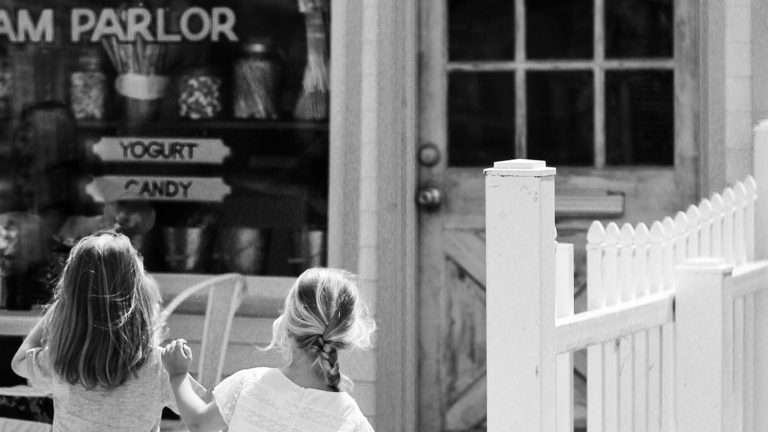
Afterward, we wandered into the town proper. Bellport has a strip of streets where the buildings lean just enough to feel human, not manufactured. Shops are curated, not overwhelming. One candy store caught our attention — the kind that doesn’t scream “tourist trap” but seduces with its window display: jars of multicolored gummies, chocolate bars stacked at awkward angles, tiny handmade cookies that look as though they were baked by someone’s grandmother with a sense of humor. The kids’ eyes lit up, and I realized that part of a town’s charm isn’t what it offers, but what it allows: the chance to experience wonder without the pressure of the “must-do” list. I bought a small bag of handmade licorice twists, the kind that don’t last long in our house but leave a memory long after they’re gone.
Next on our unplanned itinerary was the Bellport Village Green, where the subtle genius of minimal planning revealed itself. There’s a small playground, yes, but it isn’t flashy. Swings and slides exist, but the space around them — the grass, the benches, the shade of a few deliberate trees — transforms it from a playground into a pause point. My children ran and jumped, yes, but I watched as parents, myself included, sank into the rhythm of observation rather than frantic management. A good set of sneakers and a reusable water bottle — the sort of items you pick up online without thinking, that quietly support a day like this — made the experience easier, but it was the environment itself that dictated the pace. We were in no rush. The kids, freed from overstimulation, discovered a sense of endurance, of play without pressure, of attention that didn’t require screens.
Lunch was an exercise in simplicity. We chose a small café overlooking a side street, one of those places that exists in the town but doesn’t need to shout for attention. I ordered sandwiches; the kids opted for soup and small pastries. What struck me wasn’t the food — although it was pleasant, unremarkable in a way that made it comfortable — but the rhythm of the meal. No rushing. No multitasking. Conversation floated easily, interrupted by small exclamations of discovery outside the window: a dog bark, a bike clattering over a manhole, leaves stirring in the breeze. A thermos of tea, kept warm thanks to a small travel mug I picked up months ago, felt like a luxury rather than a convenience. It allowed the adult half of our party to relax into the day while still attending to basic needs.
The afternoon led us naturally to the Bellport Historical Society. Museums, in my experience, are often a mixed bag with children — either they’re bored or overwhelmed. This one was quiet, curated, and human in scale. Old photographs, objects from the town’s past, even a small model of the harbor — nothing grand, nothing imposing — but everything tangible. My children wandered at their own pace, touching only where permitted, absorbing history as a series of small, digestible stories. It was an odd kind of lesson in patience and curiosity: no one was forced to move, yet everyone left with a sense of time spent, understood, not merely endured. I noted, with mild satisfaction, that the building had comfortable benches — not an afterthought but a considered feature. You notice such things when you’ve been to enough spaces that demand attention without accommodating it.
A final stop before heading home was the small bookshop tucked behind the main street. I could have skipped it, but something about the smell of paper and quiet corners pulled me in. The kids, of course, found picture books and small toys that weren’t flashy but clever. I found a few novels I’d been meaning to touch, books that promised thought rather than instant gratification. One of them came with a recommendation for a notebook, the kind with thick pages that invite real handwriting — not just a place for reminders, but a canvas for reflection. I added it to the pile. It’s curious how objects can signal a mindset shift: the notebook wasn’t a purchase so much as a tangible reminder to slow down, to process, to observe.
Walking back to the car, the sun had dipped lower, casting long shadows that made the streets feel broader, even emptier than they were. The children’s voices were quieter, softer, their energy diffused into the stillness of the day. I realized that the top three things we did — the waterfront, the village green, the bookshop — weren’t “activities” in the conventional sense. They were opportunities for presence, for noticing, for inhabiting a space without urgency. They were deliberately uncurated, yet deeply effective.
Bellport’s lesson, if there is one, is subtle. It doesn’t force engagement. It doesn’t prescribe joy. It offers moments where attention can stretch, curiosity can flourish, and the rhythm of a day can be dictated by observation rather than itinerary. And when you return home, when the day becomes memory, it’s clear that these are the experiences that persist: not the most spectacular or marketed, but the ones that allowed thought, presence, and a gentle form of wonder to exist side by side.
Packing the kids into the car, I noticed the small items that had supported the day: tote bag, thermos, picnic blanket, notebook. Each mundane, each unnoticed in isolation, but together, quietly enabling a day that felt like a minor miracle. The simplicity of preparation mirrored the simplicity of the town. Nothing flashy. Nothing overstated. Just deliberate, thoughtful, and enduring.
And as we drove home, I realized that the real top three things to do in Bellport with kids aren’t things at all. They’re pauses: moments of slow observation, of playful engagement without pressure, and of quiet curiosity. Bellport provides the setting; the rest is up to the day, and up to the patience we bring with us. And that, oddly enough, is enough.